
Pricing is the most critical variable in eBay dropshipping. Set your price too low and you'll make no profit. Set it too high and you won't get any sales. The challenge? Amazon prices fluctuate constantly, competitors adjust their listings, and eBay's algorithm rewards competitive pricing.
In this guide, we'll show you exactly how to use repricing strategies to stay competitive, protect your margins, and automate the entire process so you're not manually updating hundreds of listings every day.
Why repricing matters for eBay sellers
eBay's search algorithm (Cassini) considers price as a ranking factor. If your product is priced significantly higher than competitors, you'll rank lower in search results — meaning fewer views and fewer sales.
For dropshippers sourcing from Amazon, the problem is compounded: Amazon changes prices multiple times per day. If Amazon raises their price above your eBay listing, you lose money on every sale. If they lower it and you don't adjust, competitors undercut you and steal your sales.
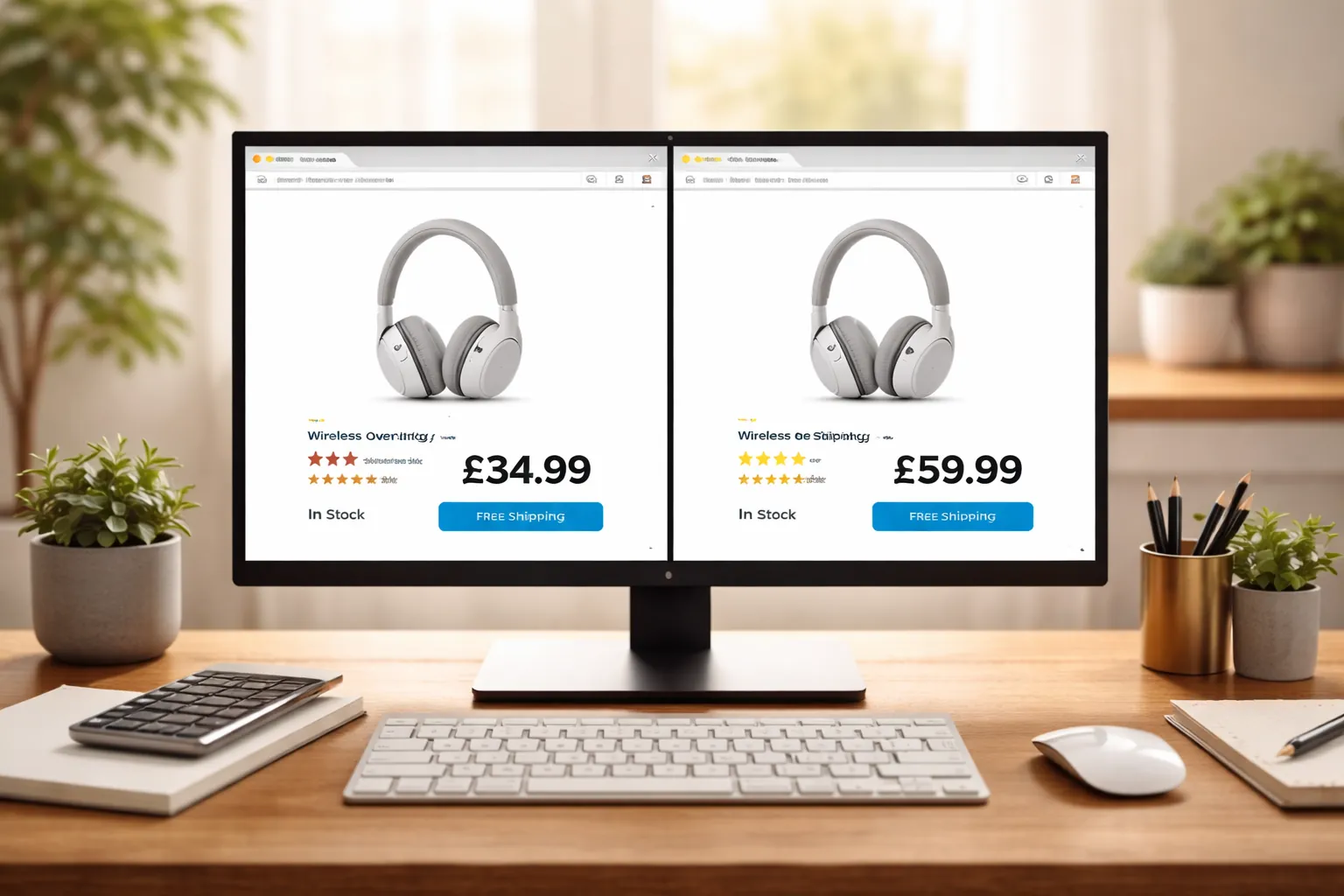
Manual vs automated repricing
When you're managing 10-20 products, manual repricing is feasible. Check Amazon prices once or twice a day, update your eBay listings accordingly. But this approach breaks down fast.
Manual repricing limitations:
- Time-consuming: Even 50 products means 50 price checks daily — 1-2 hours of work
- Delay risk: Amazon changes a price at 2 PM, you don't check until 8 PM — 6 hours of selling at the wrong price
- Human error: Miscalculate fees, forget to update a listing, accidentally set the wrong price
- Unsustainable: Beyond 100 products, manual repricing becomes a full-time job
Automated repricing advantages:
- 24/7 monitoring: Software checks Amazon prices every few hours (or on-demand)
- Instant updates: When Amazon's price changes, your eBay price updates within minutes
- Rule-based protection: Set minimum margins, price floors, and safety guards to prevent losses
- Scales effortlessly: 10 products or 10,000 — the software handles it all
💡 Tip: If you have more than 20 active listings, automated repricing pays for itself within the first month through better margins and fewer pricing errors. Calculate the cost of a single mis-priced sale versus the monthly software fee.
5 repricing strategies that work
1. Fixed margin repricing
The simplest approach: Amazon price + fixed percentage margin. If Amazon sells a product for £20 and you want 25% margin, your eBay price is £25.
Pros: Predictable profit on every sale. Easy to calculate expected earnings.
Cons: May not be competitive if other sellers are using lower margins. Doesn't account for eBay fee variations on different price points.
Best for: Beginners who want straightforward pricing and consistent margins.
2. Competitor-aware pricing
Monitor competitor listings on eBay and price your products at or slightly below the competition. If the lowest competitor is £28, you price at £27.99.
Pros: Increases sales velocity. Wins the Buy Box or ranks higher in search results.
Cons: Can trigger a race to the bottom if competitors also use this strategy. Margins may compress.
Best for: High-volume sellers who prioritise turnover over margin percentage.
3. Min/max price boundaries
Set a minimum and maximum price for each product. The repricing software can adjust within this range, but never goes below the floor or above the ceiling. Example: minimum £22, maximum £30.
Pros: Protects against selling at a loss. Prevents pricing too high and missing market demand.
Cons: May miss opportunities if the market moves outside your boundaries (e.g., a flash sale).
Best for: Risk-averse sellers who want guardrails around automated repricing.
4. Time-based repricing
Gradually reduce the price of unsold inventory over time. If a product hasn't sold in 7 days, drop the price by 5%. If still unsold at 14 days, drop another 10%.
Pros: Speeds up inventory turnover. Frees up capital tied in slow-moving products.
Cons: Reduces profit margins. May signal to buyers that the product isn't in demand.
Best for: Seasonal products or items you want to clear out quickly.
5. Safe repricing with price guards
Enable automatic pause or alerts when prices change abnormally. If Amazon's price jumps 30% or more in one update, the system flags it for manual review rather than auto-updating your eBay listing.
Pros: Protects against flash sale traps (Amazon drops price to £5 for an hour, then returns to £20). Prevents listing products at unprofitable prices during supplier errors.
Cons: Requires manual intervention when anomalies occur.
Best for: All sellers. This should be a default safety feature in any automated repricing setup.
⚠️ Warning: Never reprice without a minimum price floor. A single pricing error on a high-value item can wipe out weeks of profit. Always set a hard minimum price that covers your costs plus minimum acceptable margin.
Setting up your repricing rules
Here's how to configure repricing correctly:
Step 1: Calculate your true eBay fee rate
eBay's final value fee is around 12.8% (including category-specific fees). Add payment processing (1.4% for PayPal/Managed Payments). Total: ~14.2% in fees.
Step 2: Set your minimum margin
Decide the lowest profit margin you're willing to accept. Most successful dropshippers use 15-25% as their floor. Below 15%, the business becomes unsustainable after accounting for returns, refunds, and time investment.
Step 3: Define min/max price boundaries
For each product category, set sensible ranges. Kitchen gadgets: £10-£40. Electronics accessories: £8-£30. These boundaries prevent repricing from going wildly off-target.
Step 4: Enable safe repricing alerts
Configure your software to alert you (email or dashboard notification) when a price change exceeds 20-30%. This catches supplier errors and flash sales before they damage your margins.
Step 5: Test with a small product group
Before applying repricing rules to your entire catalogue, test with 10-20 products. Monitor for a week. Are margins holding? Are sales increasing? Adjust rules based on results, then scale.
Key takeaways
- Manual repricing is unsustainable beyond 20-50 products — automation is essential for scaling
- Use fixed margin repricing for predictability, competitor-aware for sales velocity
- Always set a minimum price floor to protect against losses
- Enable safe repricing alerts to catch abnormal price changes before they cost you money
- Test repricing rules on a small group before rolling out to your full inventory
Repricing is one of the few areas in eBay dropshipping where automation isn't optional — it's essential. The right repricing strategy keeps you competitive without sacrificing margins, saves hours of manual work each week, and scales with your business. Start with conservative rules, monitor performance closely, and adjust as you learn what works for your product mix.